Thousands of seagrass shoots have been planted in the Thames, as we kick off work to transform one of the world’s most famous waterways
- Environment
KCCF is delighted to support ZSL’s Transforming the Thames seascape programme through our recent Strategic Partnership funding. The programme focuses on restoring the ecological health of the Thames Estuary, strengthening its recovery, connectivity and resilience, and supporting its return as a thriving coastal wetland for both wildlife and local communities.
Thousands of seagrass shoots have been planted in the Thames, as conservation charity ZSL kicks off work to transform one of the world’s most famous waterways.
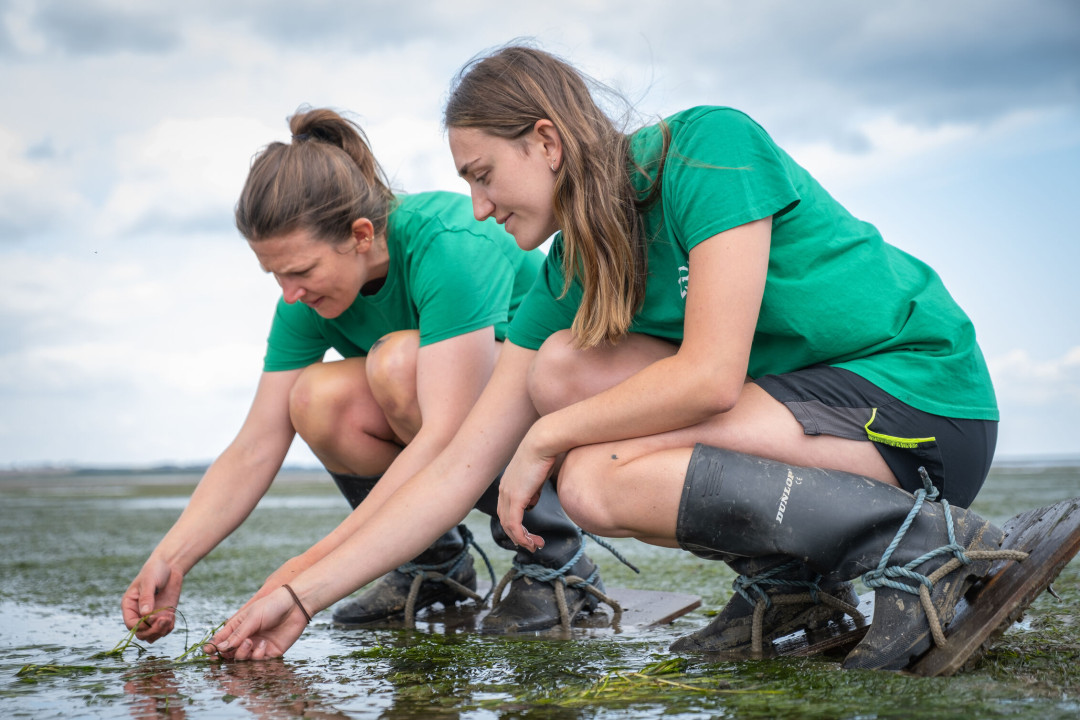
Over the course of one week, ZSL’s conservationists collected nearly 1,000 cylindrical ‘seagrass cores’ – tubes of mud extracted from the Thames, each one containing multiple individual dwarf eelgrass shoots – from a seagrass meadow in Essex, before carefully planting each one in mudflats in Kent – as part of their work to make the estuary more resilient to climate change.
One of the largest UK restoration efforts using this method, ZSL’s work is the first step in restoring a thriving seagrass meadow, with the ambition that it will grow to cover an area the size of at least 1.5 football pitches over the next few years.
The work launches the start of on-the-ground work for Transforming the Thames – an ambitious ZSL-led project bringing together 20 partners to turn the tide on the health of the Greater Thames Estuary and deliver wide reaching benefits to the British wildlife and the 8 million people that live along the Estuary.
The five-year project brings together conservationists, local communities, government bodies and landowners, building on decades of experience to recover a rich, varied coastal landscape by 2030. In doing so, Transforming the Thames will help improve access to nature, protect local communities against the impacts of climate change and support the species that call the Thames home – from Critically Endangered European eels and sharks to beloved seahorses and lapwings.
Thea Cox, ZSL’s Transforming the Thames Senior Restoration Manager said:
Seagrass meadows are critical to the health of the Thames, and we’re thrilled to be kicking off our work transforming this iconic estuary by getting stuck in on the mudflats.
We rely on healthy ecosystems for our own wellbeing, but decades of degradation and fragmentation have left the Greater Thames Estuary with a poor bill of health – and increased storm events and marine heatwaves due to climate change threaten the health of the estuary further. We know that it can recover, and are excited to see the Thames flourish as we work to restore habitats along its shores, make its coastlines more resilient to climate-change driven storms, and connect people with everything it has to offer.
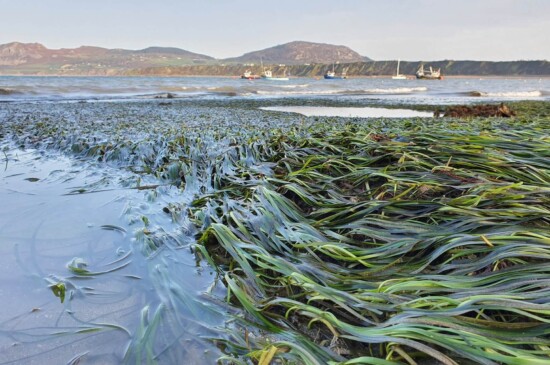
Seagrass meadows play a vital role in the marine environment, providing essential nursery grounds for fish, food for birds, and habitat for various invertebrate species. Seagrass in the UK has declined up to 44% of seagrass since 1936 due to decreased water quality, disturbance and pollution – threatening wildlife and putting people at greater risk of flooding and coastal erosion.
Areas of healthy seagrass meadows can still be found along the Thames, and the seagrass was collected during low-tide from existing meadows near Leigh-on-Sea, Essex, ready to be planted in Egypt Bay, Kent.
The team of conservationists and volunteers used specially designed wooden mudshoes to navigate the challenging mudflats, helping prevent them from sinking into the mud as they worked. As the work could only take place during low-tide, a hovercraft was also used to transport the team and their equipment over the mudflat so they could collect or plant as many seagrass plants as possible before the sites were submerged in water.
Thea added:
This year marks ZSL’s 200th anniversary, a year where we celebrate all we’ve achieved so far and look ahead to a future where people and wildlife thrive together. As we work to restore these coastal meadows, we’re not only marking the start of a new exciting chapter for the Greater Thames Estuary – we’re also making that future a reality.
To rebuild a healthy, resilient ecosystem, the seagrass planting will be followed by further work by the Transforming the Thames partnership to restore around 450 football pitches worth of six vital habitats across the Greater Thames Estuary – native oyster beds, seagrass meadows, saltmarshes, coastal grazing marsh, saline lagoons, and sand and shingle bird nesting habitat.
Working towards a 100-year vision of recovery across the estuary, the partnership are also working to tackle the biggest threats destroying existing habitats – such as pollution – and working with local communities and businesses alike to empower them to be a part of scaling up transformation across the region.
ZSL believes nature can recover, and that conservation is most effective when driven by science. We call for science to guide all global decisions on environment and biodiversity and build a healthier future for wildlife, people and the planet. Find out more and support ZSL’s world-leading, collaborative science and conservation work at www.zsl.org