Guest blog: Plantlife investigates lawn biodiversity through citizen science
- Environment
Welcome to BLOOM, and our latest guest blog written by Plantlife intern Rachel Inhester. BLOOM stands for Biodiversity in Lawns as Observed through Open-source Machine vision. It is the start of what will hopefully become a new, large scale citizen science programme and it has been a focus of my work during my Conservation Science Internship with Plantlife.
In April 2024 I began my internship with Plantlife and was introduced to the BLOOM project on my very first day. I’ve been able to see this project through almost every stage, from early meetings with our academic partners where we were compiling ideas, to now trialling a pilot phase of BLOOM with a team of volunteers!
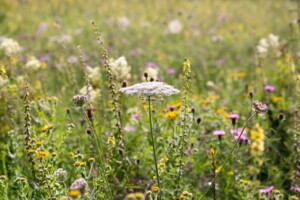
The BLOOM project is working towards the creation of a new citizen science programme based around biodiversity in lawns, which will allow people to be involved in nature research and conservation without any prior botanical knowledge. The future citizen science programme will enable members of the public to take photos of their lawns throughout the year and the flowering species in those lawn photos will be identified using Artificial Intelligence (AI).
It is an exciting opportunity to build up a nationwide picture of our UK lawns, the plant species within them, and the pollinators they are supporting. We would like to understand how lawn species vary regionally, and how they may respond to different management techniques. We are particularly interested in how biodiversity in lawns may be affected by different mowing regimes.
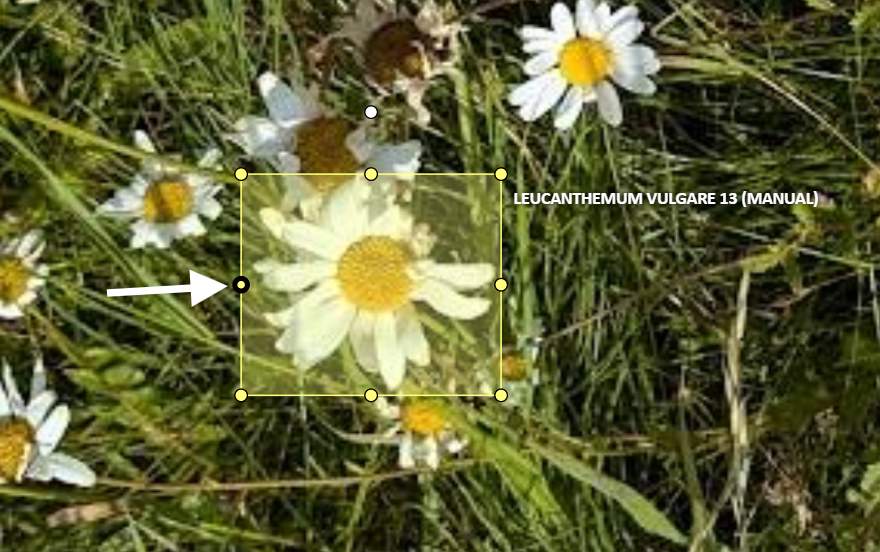
Before the large scale citizen science programme can begin, we first need to develop the AI that BLOOM is dependent on. This AI model will differ from typical plant ID apps in that it will be able to recognise multiple species in one image rather than identifying one species at a time. Training this model takes a lot of time and effort, and for this we needed the support of a team of volunteers.
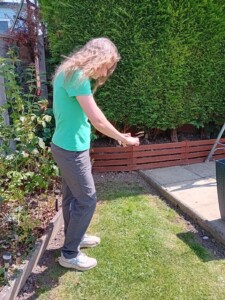
Our initial BLOOM volunteers are all botanical experts, and their role is to take photos of flowers in lawns, identify and label them so that they can be used to train the AI. With the assistance of colleagues, I have gained experience in creating interactive training materials, drafting and advertising a volunteer role, recruiting for the position and I am now responsible for the ongoing support and communications with our team of volunteer botanical specialists.
Each month we receive a new set of labelled photos from our volunteers, and all of these will be used to train the AI by our academic partners. Since our volunteers began in April, we have received over 300 labelled images.
As a keen nature enthusiast, my internship has been a great opportunity to work behind the scenes and be involved in considering how to encourage more people to get involved with conservation and research through a citizen science programme.
But that’s not the only lesson I have learnt as part of this project. Witnessing BLOOM grow and develop has given me a much better appreciation of how much work and team effort is required to accomplish something like this.
We are now several months into the pilot phase of BLOOM and will hopefully have a better understanding of how the AI training is progressing very soon! All being well, if this pilot phase progresses as it should and funding is achieved to take this even further, there will be a new botanical citizen science programme on the horizon very shortly!
Photo credits © Mark Schofield/CVAT, Rachel Inhester and Pip Gray
More news
Sir Peter Rigby Coronation Food Hub opens in Birmingham
Eleven million more meals delivered – second anniversary of the Coronation Food Project