Intercropping boosts yields and resilience in farmer-led trial
- Countryside
Since 2012, KCCF has been a key funder of Innovative Farmers, supporting more than 35 field labs that enable farmers, growers and researchers to develop and test practical approaches to sustainable and regenerative agriculture. Research from Innovative Farmers, a network that brings together farmers, growers, researchers and advisers to test and share practical innovations in sustainable agriculture in on-farm research trials, has found that intercropping can increase overall crop yields by up to 20% while helping farmers adapt to increasingly unpredictable weather patterns.
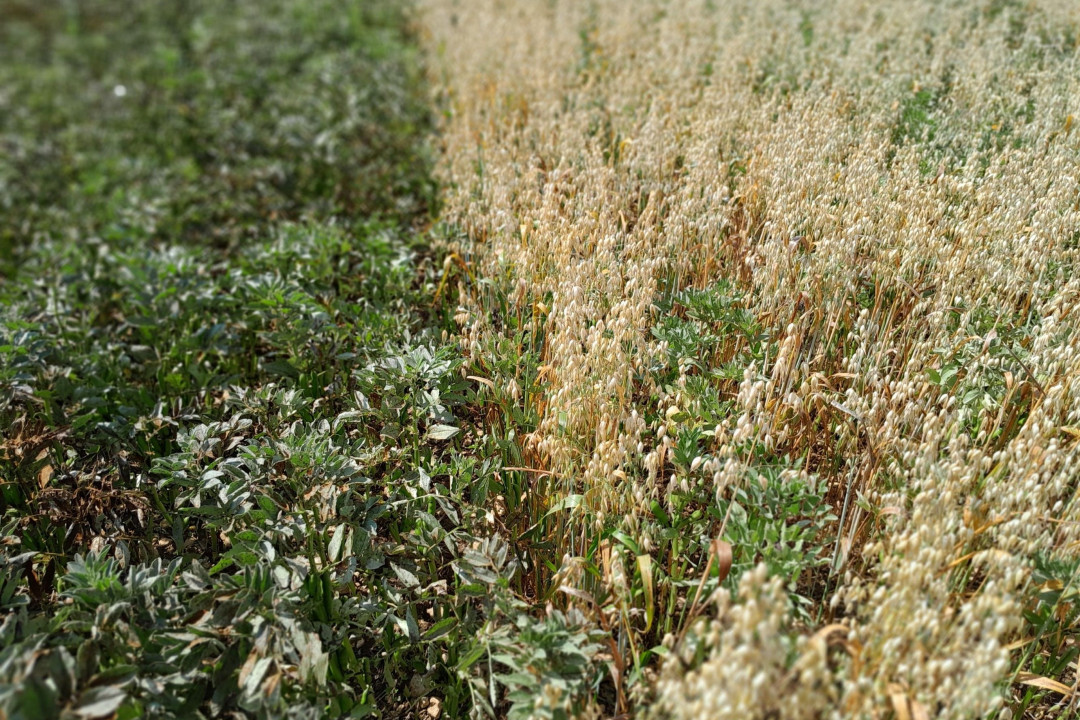
The findings on intercropping come from a three-year farmer-led field lab, conducted as part of the international LEGUMINOSE project, which investigated the benefits of growing cereals and legumes together. Across 17 UK farm trials, farmers found that intercropping not only improved total productivity but also increased grain protein levels, reduced weed pressure and provided greater resilience in both dry and wet conditions.
Participants reported that intercropping can act as a valuable risk-management tool, with different crops responding differently to weather extremes. In many cases, farmers were able to harvest productive crops across fields where a single crop might have struggled.
The results demonstrate the value of farmer-led research in identifying practical, nature-friendly farming methods that can strengthen food production while supporting environmental sustainability. Through its field labs, Innovative Farmers enables farmers, researchers and advisers to test ideas under real-world conditions and share the results openly across the sector.